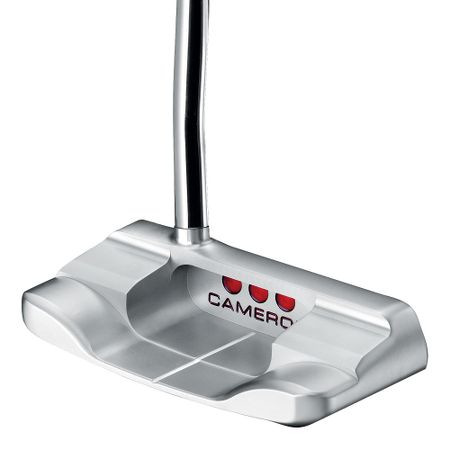
Scotty Cameron 推杆声名赫赫, 它结合了最优秀的不锈钢材料和镶嵌技术,提供了很棒的手感和声响,同时其触感又是柔软,反应敏捷的。一块高规格的德国不锈钢片通过一片特殊的减震垫 镶嵌在经铣床精密加工的不锈钢杆身上,整个镶嵌部分又用弹性衬垫来加强柔软的手感。
Don T. “Scotty” Cameron 于1962年出生在美国加州的Glandale, 专门制造, 销售推杆。他最开始在他父亲的一个朋友家的车间里制造推杆, 后来又搬到岳母家的车库。 1986年, 他开始了和高尔夫球有关的第一份工作, 不久就辞职离开。

Scotty Cameron 本人
辞职后, 他开始研究T.P. Mills 和Karsten Solheim 的推杆, 并与1991年之中了第一个零售用的推杆, 当时起名叫 Fry’s Pity 推杆。当时一个朋友 John Fry 订购了700 个这种推杆。 这增加了Cameron 的信心, 成为日后Scotty Cameron 推杆的成功跳板。
然后他开始把推敢直接销售给厂家, 包括Maxfli, Cleveland 等等。 1992年, 他开始独家销售给Mizuno. 1992年后期, 他想生产Anser 类型的推杆, 但是Mizuno不同意, 他们从此分手。他和妻子开设了一家公司销售Scotty Cameron 经典推杆。 1993年, 德国球员 Bernhard Langer 使用他的推杆夺取了美国大师赛的桂冠。 Cameron 利用这次机会推广自己的公司, Langer用的那种推杆成为 Cameron 经典I号。
1994年八月, Titleist的母公司购买了Scotty Cameron 的所有权利, 使其成为唯一的制造商, 从此之后, Scotty Cameron 成为推杆老大。
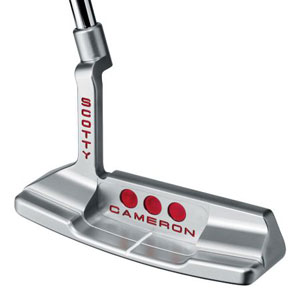
自从1993年以来, 用Scotty Cameron 推杆的职业球员共赢的100多场巡回赛的胜利, 四大满贯赛的冠军大约有1/3 使用这种推杆。
2011年5月, 南韩的FILA体育公司购买了Titleist公司, Scotty Cameron 推杆也是交易的一部分, 所以现在大名鼎鼎的Cameron推杆可以说是韩国产品。同时出售的还有高尔夫鞋具,手套,衣服的著名品牌Footjoy. 整个交易额为11亿美元。
Scotty Cameron的历年产品线(摘自wikipedia):
| 年份 | 产品线 |
|---|---|
| 1992 | Scotty Cameron designed putters for Mizuno. Four production models were designed for the U.S. market: the M-100, M-200, M-300 and M-400. These were copies of TP Mills designs and the Taylor Made TPA XVIII |
| 1993 | First line of Scotty Cameron putters released by Cameron Golf International, referred to as the Classics. These were one piece milled putters manufactured by Bettinardi. |
| 1994 | Second line of Scotty Cameron putters released by Cameron Golf International, referred to as the Scottsman series. These were two piece milled putters sold at a lower price point. |
| 1995 | First line of Scotty Cameron by Titleist putters released, with all models taking their names from locations in California: Newport, Catalina, Coronado, Del Mar, La Costa, Laguna,and Napa. Santa Fe, Newport 2 and Sonoma models were added in 1996 |
| 1996 | Santa Fe, Newport 2 and Sonoma models were added |
| 1997 | Teryllium series was introduced, featuring an alloy face insert. Three models were initially released: Newport, Newport 2 and Santa Fe. |
| 1998 | Oil Can Classics, a revision of the Classics product line was released with a new oil can finish. Teryllium Del Mar 2, and “Long Neck” versions of the Newport and Newport 2 were released |
| 1999 | The second generation Teryllium II series was launched, with a polymer cushion added behind face insert to soften the feel. Pro Platinum series was introduced, featuring a non-glare finish, and available in four models: Newport mid-slant, Del Mar 3, Laguna 2, and Sonoma 2 mid-slant |
| 2000 | The Oil Can Classics series was discontinued. Mil-Spec Newport putter was released, featuring different length, weight, and lie angle options to allow for custom fitting. |
| 2001 | Studio Design series was introduced, featuring a classic blade-style design, and were the first Cameron/Titleist putters missing the familiar California names. There were four models: 1, 1.5, 2 and 3. Bulls Eye, Cameron’s interpretation of the classic design in a “pro platinum” finish, was released with two models options: flange and non-flange. |
| 2002 | The Teryllium II series was discontinued. Studio Stainless series was introduced. They were milled from 303 stainless steel and available in four models: Newport, Newport 2, Newport 2.5 and Newport Beach. |
| 2003 | The Pro Platinum series was discontinued. Futura model was introduced with a radically different design from anything Cameron had produced in the past, and available in standard and mid (44” long) models. |
| 2004 | Red X, mallet-style, series was introduced, featuring a high-grade stainless steel face insert intended to enhance feel. |
| 2005 | The Studio Stainless series was discontinued. Studio Style series was introduced, mimicking the appearance of the Studio Stainless while incorporating the insert technology of the Red X. This series featured four models: Newport, Newport 1.5, Newport 2, Newport 2.5. The Futura series was renamed Futura Phantom and its appearance updated, with two mallet-style putters added to the line. |
| 2006 | Circa ’62 series, referring the year TP Mills started making putters, was introduced, featuring a classic design similar to that of the Studio Design series, with models named in the same numeric fashion (1,2,3 & 5). Red X Mid (43”) and Long (48”) models were added. Detour model was introduced featuring a very unconventional design. Napa Valley limited edition was released, with 2006 pieces (1,800 right-hand and 206 left-hand) available. |
| 2007 | The Circa ’62model line was updated with a new “Charcoal Mist” finish, and the number 5 model was replaced with the 6. The Red X series had two new models introduced that did not feature the face insert of the originals. The Detour series was adapted for use in two “conventional” putter models: Newport and Newport 2.5. Teryllium Ten (T10) limited edition was released, featuring a brilliant black pearl finish, stepless chrome shafts, and a hand-stitched leather grip. There were 2007 pieces available in each of the Newport 2, and Newport 2.5 models. Catalina Classic limited edition is released with 2007 pieces available. |
| 2008 | The Studio Style series was discontinued. Studio Select series was introduced. An update to the studio style, it had a higher toe designed to prevent pulling putts to the left, factory adjustable weights near the heel and the toe, a solid stainless face and the tour “cherry bombs” on the back and on the head cover. It was available in Newport, Newport 1.5, Newport 2 and Newport 2 midslant models. Button Back Newport and Button Back Newport 2, similar to the Studio Select line but with a copper insert in the face, was introduced. It was available in limited quantities of 4000 each world wide. Cameron introduced what he called one of his “finest creations”, the Damascus 009.[11] |
| 2009 | Studio Select Kombi, Studio Select Kombi Mid and Studio Select Kombi Long, all mallet style, were added to the Studio Select series. The “California” Series was released, bringing back older models Del Mar, Coronado, Sonoma, Monterey in a honey dipped finish with interchangeable weights similar to the “Studio Select” line. The “Napa California” was also released in a Gun Blue finish and a leather headcover. It was the first limited edition putter to feature the “Pittard’s” leather stitchback grip, with 3,500 made (3,250 right-hand and 250 left-hand) available. |